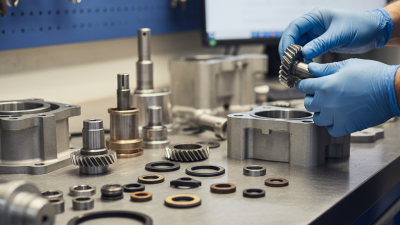



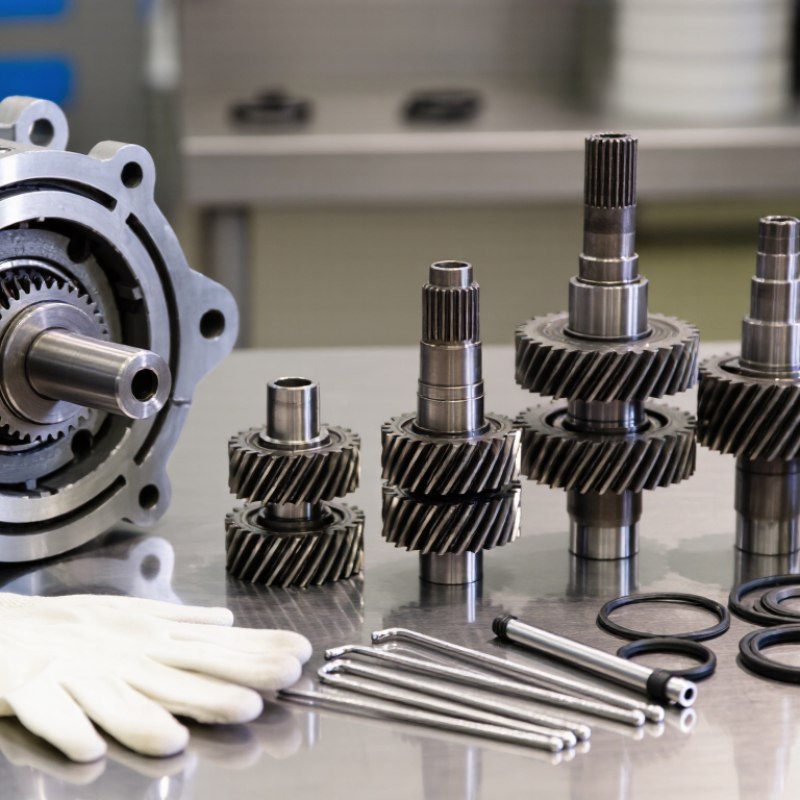
Choosing OEM gear pump spare parts is mainly a compatibility decision, not a loyalty decision. The U.S. Department of Energy’s Improving Pumping System Performance sourcebook states that pumping systems may consume about 25% of industrial electricity. Small hydraulic losses therefore deserve attention. OEM parts preserve the specified displacement, shaft geometry, mounting pattern, port position, and pressure rating. These details must work together. A replacement can fit the housing yet still produce noise, heat, or unstable flow.
Precise compatibility starts with controlled drawings and traceable dimensions. Technicians should compare shaft diameter, keyway depth, flange bolt spacing, inlet and outlet orientation, seal material, and rotation direction. A two-millimeter error can alter coupling alignment. It can also increase bearing load. The Hydraulic Institute’s pump standards emphasize verified operating conditions, tolerances, and application data rather than appearance alone. That principle matters for gear pumps. Similar-looking parts are not automatically interchangeable.
IEA’s Energy Efficiency 2023 report notes that electric motor systems consume roughly half of global electricity. Efficient pump operation supports that larger energy picture. Yet selecting OEM parts is not a magic guarantee. Contamination, incorrect oil viscosity, or poor installation can still damage a new pump. I would not approve a replacement from the part number alone. Check service history, pressure records, and measured shaft condition. The best decision combines manufacturer drawings with evidence from the actual machine.