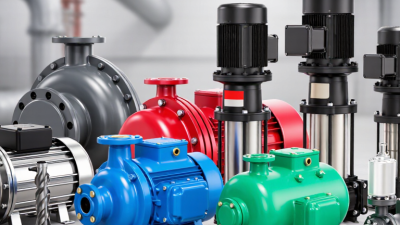
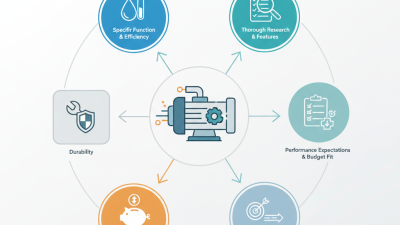
Finding quality pumps from China takes more than comparing prices or browsing polished product pages. China has a broad manufacturing base, but supplier capabilities vary. A dependable search starts with your operating conditions: required flow, head, fluid temperature, viscosity, and solids content. A pump that looks right in a catalog can still fail in a real installation.
Quality expert W. Edwards Deming is widely associated with the principle, “Quality is everyone’s responsibility.” For pump buyers, that means looking beyond a single inspection. Ask how the factory controls casting defects, impeller balance, assembly tolerances, and final testing. Request a performance curve for your duty point, a hydrostatic test record, and serial-number traceability. Check that the motor nameplate matches the quoted specification. Small details matter.
Look for evidence, not promises. A current quality-management certificate can be useful, but it does not prove that a specific pump will meet your needs. Ask whether test reports identify the unit, test conditions, and measured results. Compare those results with your required flow and head. If possible, arrange a witnessed test or an independent inspection before shipment.
Be cautious with vague answers. A supplier may have attractive brochures and still provide incomplete documentation. That is easy to miss when deadlines are tight. This guide explains how to assess manufacturers, verify product quality, and compare practical safeguards before placing an order. The aim is not to find the cheapest pump. It is to find a pump that performs reliably in your system.
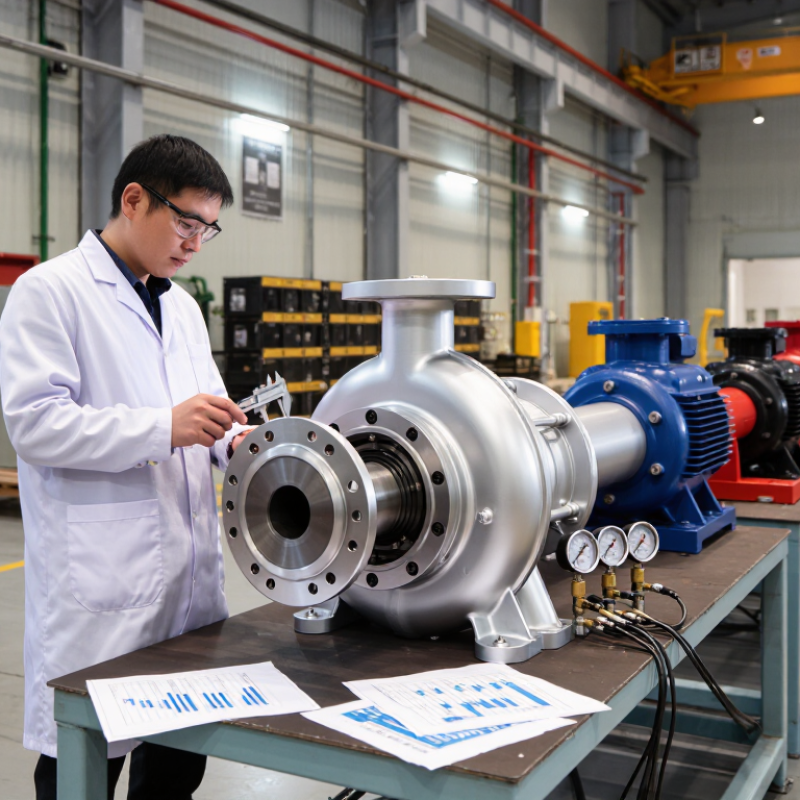
Before comparing pumps from China, write down the actual duty point: required flow, total head, and how often the pump will run. The U.S. Department of Energy’s Improving Pumping System Performance sourcebook reports that pumping systems can account for 25–50% of energy use in some industrial facilities. That makes an inaccurate duty estimate costly. Record pipe length, diameter, elevation changes, and fittings; a narrow line or extra bends can raise friction losses. Check whether demand stays steady or varies by shift. It often does.
Describe the liquid and site conditions just as carefully. Note temperature, viscosity, density, acidity, and any suspended solids; these affect hydraulic performance and material selection. For example, a warm, viscous liquid may need more power than clean water at the same flow rate. Specify suction pressure, available space, power supply, and expected start-stop frequency. Ask suppliers to calculate the system curve and identify the pump’s operating point, rather than choosing by motor power alone. Request test data at the stated duty point, including efficiency and tolerances. Small details matter. I have seen specifications omit seasonal temperature changes; that is an easy mistake, and one worth revisiting before requesting quotations.

For water, 1 bar is approximately 10.2 m of head. Use this conversion to relate required pressure to pump head; total dynamic head must also account for elevation changes and pipe losses. Actual head varies with fluid density.
Selecting a pump starts with the liquid, not the catalog photo. Record flow, total head, temperature, viscosity, solids, and suction conditions. A clear-water pump may struggle with abrasive slurry or hot, viscous fluid. Small detail. Big consequence.
Match the duty to a recognized standard. ISO 2858 covers dimensions and rating for end-suction centrifugal pumps; ISO 5199 sets technical requirements for many industrial centrifugal pumps. ISO 9906 specifies hydraulic performance acceptance tests. For petroleum, petrochemical, and natural-gas service, API 610 may apply. These standards are not interchangeable. Check the exact edition and scope against the project specification.
Performance evidence matters. The U.S. Department of Energy’s Improving Pumping System Performance sourcebook estimates that pumping systems use nearly 20% of global electricity. Treat this as a broad estimate, not a prediction for one factory. Ask suppliers for a certified performance curve, test conditions, material list, and inspection records. Verify the stated duty point against the curve, including efficiency and NPSH requirements. A neat datasheet can still hide a mismatch. I would also confirm whether the test uses the same impeller diameter and fluid conditions as the quotation; buyers sometimes overlook that.
How to Find Top Quality Pumps from China?
Assess Chinese Manufacturers and Their Production Capabilities
China’s manufacturing scale offers buyers a broad supplier base, but scale alone does not prove factory-level quality. UNIDO’s International Yearbook of Industrial Statistics 2024 reports that China produced about 31.8% of global manufacturing value added in 2022. Treat this as context, not a pump-quality score. Assess the actual plant, staff expertise, production equipment, and quality records.
Look for controlled machining and assembly, traceable materials, and documented inspection procedures. Ask the manufacturer to demonstrate hydrostatic, flow-head, and power-consumption tests on a representative pump. Check that instruments are calibrated and test results match your required operating point. The IEA’s 2011 report on electric motor-driven systems estimates they use about 69% of industrial electricity. Pump efficiency data therefore matters, but compare test conditions carefully. Paperwork can still mislead.
Tips: Request a factory audit and recent test records, not only product brochures. Ask how the supplier handles production changes and rejected units. A polished showroom is not proof; it is easy to forget that. Look for consistent records across several batches.
A certificate is useful only when its scope matches the pump being purchased. Check the model number, materials, applicable test standard, issuing body, and validity dates. Ask for the original document and confirm that it covers the supplied configuration, not just a similar product. Paper is not proof.
Before production, agree on inspection points with the supplier. For a centrifugal pump, these may include casing dimensions, material records, shaft runout, impeller balance, and assembly clearances. Photos help, but they cannot replace measurements. An independent inspector can verify selected steps, especially when the order is large or specifications are tight. I have seen small document gaps slow acceptance; they are easy to overlook.
Require a test report tied to the actual order. It should identify the pump and record flow, head, power, pressure, and leakage results, as relevant to the design. Request readings at several operating points, not only one favorable condition. Check that instruments have current calibration records, and ask whether testing follows the agreed procedure. If practical, witness a test or arrange a sample inspection before shipment. A test passed on one unit does not guarantee every unit is consistent. That distinction is worth stating plainly.
| Verification Area | Evidence to Request | What to Check | What It Helps Confirm |
|---|---|---|---|
| Quality management system | A current ISO 9001 certificate and its scope | Confirm that the certificate covers the relevant manufacturing site and activities. Check its validity and verify it with the issuing certification body. | Whether the organization operates a certified quality management system. ISO 9001 is not a product certificate and does not, by itself, prove that a specific pump meets its requirements. |
| Product conformity for the destination market | Applicable declarations, technical documentation, and conformity records | Identify the regulations that apply to the pump, motor, controls, and accessories in the destination country. For products placed on the EU market, request the relevant EU Declaration of Conformity where required. | Whether the supplied configuration has been assessed against the applicable legal requirements. A CE marking is not a general quality grade or a substitute for performance testing. |
| Hazardous-area equipment, when required | Relevant ATEX or IECEx documentation for the motor and other covered electrical equipment | Match the equipment marking and certificate details to the specified hazardous-area zone, gas or dust group, temperature class, and product configuration. Confirm that the certificate applies to the equipment supplied. | Whether the covered equipment is suitable for the specified explosive atmosphere. These requirements apply only when relevant to the installation and do not automatically certify every pump component. |
| Material traceability | Material test certificates, such as EN 10204 Type 3.1 where specified, linked to component or heat numbers | Compare the material grade and traceability identifiers with the purchase specification and pump bill of materials. Check that records correspond to wetted parts and other critical components. | Whether specified materials can be traced to documented inspection and test results. The required certificate type should be agreed in the purchase contract. |
| Performance test | A factory test report showing measured flow, head, speed, power, and efficiency where applicable | Compare results with the agreed duty point, acceptance criteria, and test method. ISO 9906 provides acceptance tests for rotodynamic pumps; the selected grade and tolerances should be stated in the contract. | Whether the tested pump's hydraulic performance meets the agreed requirements. A standard reference alone does not establish the acceptance limits for a particular order. |
| Pressure and leakage checks | Hydrostatic or pressure-test records for the casing and any specified pressure-containing parts | Confirm the test pressure, duration, components tested, test medium, and acceptance criteria against the contract and applicable design or product requirements. | Whether the tested pressure-containing parts met the stated test criteria. Test requirements vary by pump type and specification. |
| Mechanical condition | Inspection records for dimensions, clearances, alignment, and vibration, as applicable | Check measured values against approved drawings and the agreed acceptance standard. For vibration, confirm that the measurement method and evaluation criteria are appropriate for the pump type and installation. | Whether assembly and operating condition checks were completed and the results meet the project requirements. |
| Electric motor checks, when supplied | Motor nameplate data and routine test records | Compare voltage, frequency, speed, enclosure rating, insulation class, and other specified details with the order. Review electrical test results against the motor specification and applicable standards. | Whether the motor supplied matches the specified electrical and mechanical configuration and has documented routine checks. |
| Pre-shipment inspection | Inspection checklist, photographs, nameplate details, and packing records | Verify model and serial numbers, accessories, coating, preservation, packaging, and completeness against the approved purchase documents. Arrange an agreed witness or third-party inspection if required. | Whether the pump and its documentation appear consistent with the order before dispatch. Inspection does not replace design review or performance testing. |
A low pump price can hide expensive gaps. Compare quotations against the same flow rate, head, materials, motor efficiency, and test requirements. Check whether the price includes packing, inspection, and export documents. A quote with fewer details may look attractive, but it is harder to verify. Ask for an itemized breakdown. Small differences matter.
Delivery terms deserve equal attention. Request a written production lead time, dispatch date, and estimated transit window. Confirm the delivery term, named destination, packaging method, and responsibility for freight costs. For example, a wooden crate and moisture protection may matter when equipment travels by sea. Ask what happens if production slips. A schedule is only useful when its assumptions are clear.
After-sales support should be specific, not just reassuring. Ask how quickly technical questions are answered, which spare parts are stocked, and how warranty claims are assessed. Request manuals, test records, and a clear contact process before placing an order. This comparison is rarely perfectly tidy; suppliers may define support differently. That is worth noting. A short response time sounds useful, but only if the team can diagnose the problem and provide practical next steps.
We are here to help you with all your queries and concerns, just write to us using the below form and we will get back to you as soon as we can.