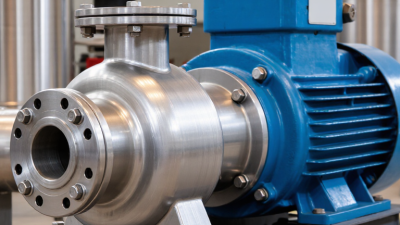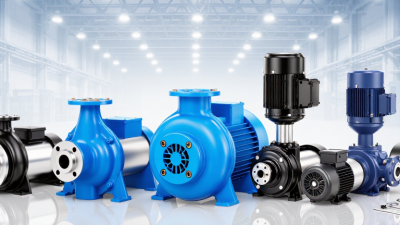
Buying a pump across borders is not just a price comparison. The wrong model can arrive with the wrong voltage, fittings, or performance range. A useful guide starts with the job: moving clean water to a rooftop tank, draining a shallow well, or supplying a farm line. Each task demands different flow and pressure.
Pump-selection engineer Alex Morgan puts the principle simply: “Choose for the system, not the sales sheet.” Treat that as a practical reminder, not a substitute for checking manufacturer data. A pump’s advertised maximum flow rarely matches its output at real operating pressure. Buyers should compare the required flow rate, total head, pipe size, liquid temperature, and available power. Small details matter. A narrow pipe or several sharp bends can reduce delivery at the outlet.
The seven tips ahead help global buyers assess more than the sticker price. They cover pump type, materials, efficiency, certifications, supplier verification, shipping details, and access to replacement parts. For water pump water applications, confirm that wetted components suit the intended water quality and operating conditions. Request a performance curve, written warranty terms, and clear installation guidance. A seller’s promise is not enough.
Some points deserve a second look. An energy-efficient model may cost more upfront, while a cheaper unit may consume more power over years of use. And even a carefully selected pump can underperform if installed poorly. These checks cannot remove every risk, but they can make comparisons clearer and help buyers ask better questions before placing an order.
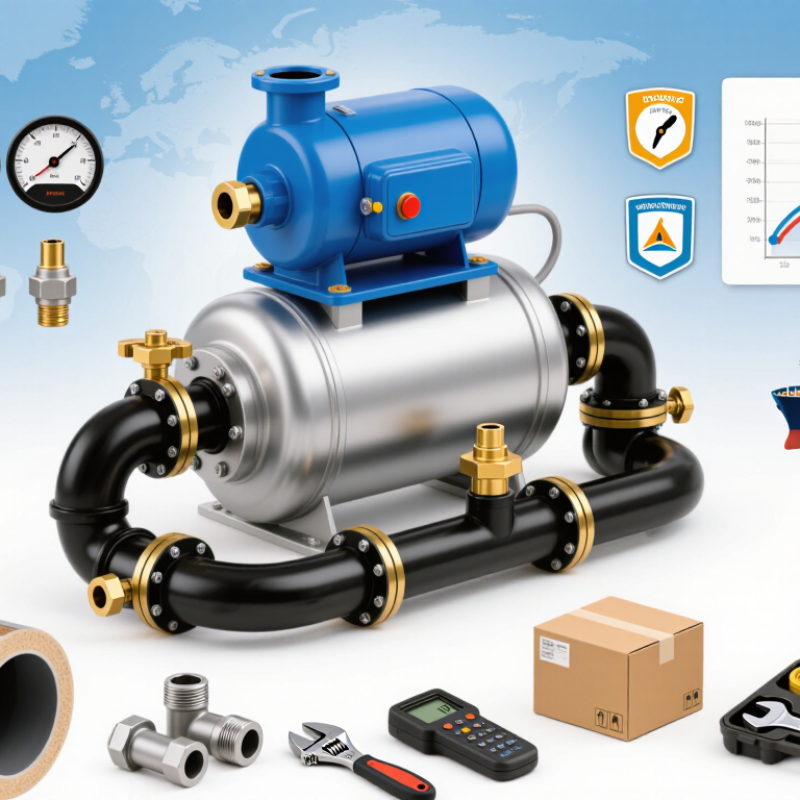
When buying a water pump globally, start with verified duty-point data, not a catalogue’s maximum rating. Flow, head, and NPSH must match the real installation.
Flow is the required volume, such as 80 m³/h. Head is the pressure expressed as water-column height, including elevation, friction, valves, and pressure requirements. Ask for performance results tested under ISO 9906 procedures. These results help compare the stated duty point with measured pump performance. A pump reaching 80 m³/h at 42 metres may still fail if the pipeline adds unexpected resistance.
NPSH deserves careful attention. Compare available NPSH at the site with the pump’s required NPSH at the selected flow. Consider water temperature, suction-pipe length, liquid level, altitude, and inlet losses. Keep a practical margin, but confirm the supplier’s calculation method. Measure the system. Do not copy a generic value.
I once focused too heavily on flow and overlooked a short, undersized suction line. The pump met the headline duty, yet cavitation appeared during hot-weather operation. That mistake changed how I review documents. I now request test conditions, tolerances, liquid properties, unit conversions, and the exact duty point. Details matter. ISO 9906 data improves confidence, but it cannot replace a site-specific hydraulic review. An attractive curve may still hide poor assumptions.
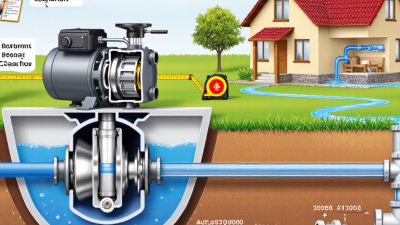
A pump’s nameplate efficiency can mislead if the selected unit rarely operates near its best efficiency point (BEP). Compare the expected duty point with the manufacturer’s performance curve, including flow, head, and efficiency. The U.S. Department of Energy’s Improving Pumping System Performance sourcebook reports that pumping systems use nearly 20% of global electricity demand, underscoring why small efficiency gaps matter across long operating hours.
Oversizing often appears as excess discharge pressure, a throttled valve, or a bypass returning water to the tank. These clues deserve attention. Estimate demand across real operating conditions, not just peak flow, then check whether a smaller pump, impeller adjustment, or variable-speed control better matches the system. Variable speed is not automatically the answer; systems with high static head may save less than expected.
Compare annual energy costs at the actual operating point, not only at BEP. Record flow and pressure during typical shifts, and note seasonal changes. Field readings can be imperfect, especially when demand fluctuates, so treat a single measurement cautiously. Recheck the assumptions before ordering.
| # | Buying Tip | What to Compare | Practical Check | Why It Matters |
|---|---|---|---|---|
| 1 | Define the actual duty point | Required flow rate (m³/h) and total dynamic head (m), including static lift and friction losses. | Provide minimum, normal, and maximum operating conditions. Confirm the units and liquid properties used in each quotation. | A pump should be selected for the system’s real operating range, not just a single estimated point. |
| 2 | Compare efficiency at BEP | Best efficiency point (BEP), pump efficiency at the required duty point, and the distance between that point and BEP. | Request the pump performance curve showing flow, head, efficiency, and power. Compare proposals at the same duty point. | BEP is the point on a pump’s curve where its hydraulic efficiency is highest. Operating far from it can increase energy use and operating stress. |
| 3 | Check input power, not efficiency alone | Pump input power at the duty point, motor rating, and expected annual operating hours. | Illustrative example: 100 m³/h at 30 m head requires about 8.18 kW of hydraulic power. At 75% pump efficiency, input is about 10.9 kW; at 60%, about 13.6 kW. | The example uses water and excludes motor and drive losses. Comparing input power at the same duty point helps estimate energy costs more directly. |
| 4 | Avoid unnecessary oversizing | Selected pump capacity versus the calculated system requirement; expected operation relative to the pump curve. | Ask for the selection basis and stated design allowance. Do not add arbitrary extra flow or head without a documented system need. | Excess capacity can lead to throttling or operation away from BEP, wasting energy and potentially increasing wear. |
| 5 | Match the pump to the system curve | Pump curve against system curve, including changes in flow demand and control method. | For variable demand, assess whether speed control is suitable. For geometrically similar operation, pump affinity laws approximately relate flow to speed, head to speed squared, and power to speed cubed. | A variable-speed drive can help match output to changing demand, but savings depend on the system and operating profile. |
| 6 | Verify NPSH and suction conditions | Available NPSH (NPSHa) versus required NPSH (NPSHr) at the expected flow and liquid temperature. | Check suction piping losses, liquid level, temperature, and altitude. Agree an appropriate margin for the application with the supplier and applicable project requirements. | Insufficient suction pressure margin can cause cavitation, noise, vibration, and damage. NPSHr is specific to the pump and operating condition. |
| 7 | Assess lifecycle cost and test evidence | Energy use, maintenance needs, spare-parts availability, warranty, and documented performance testing. | Specify the required hydraulic performance test and acceptance criteria in the contract. ISO 9906 provides methods and acceptance grades for rotodynamic pump hydraulic performance testing. | Purchase price alone does not show operating cost. Clear test and service requirements make offers easier to verify and compare. |
Note: The power figures are illustrative calculations for water. Actual pump and motor input depends on the selected equipment, operating point, and installation.
When buying a water pump globally, start with its motor, not the painted casing. IEC 60034-30-1 defines efficiency classes for many line-operated AC motors. IE3 means Premium Efficiency. IE4 means Super Premium Efficiency. These ratings describe motor efficiency, not the complete pump system. Check the motor nameplate, rated output, voltage, frequency, and efficiency at the stated operating point. Small details matter.
Ask the supplier for an independent test report or conformity documentation. Confirm that the declared IE class matches the motor’s actual design. Check enclosure protection, insulation class, cooling method, and duty rating. These seven checks prevent expensive surprises: motor class, test data, voltage, frequency, load, operating hours, and service support. Do not compare IE3 and IE4 by purchase price alone. Estimate annual energy use under your real duty cycle. An IE4 motor may repay its higher cost quickly in continuous operation. It may offer little benefit for a rarely used backup pump.
I have seen buyers select IE4 motors, then overlook throttled operation and poor pipe sizing. The motor was efficient. The installation was not. For variable-speed drives, verify compatibility separately, because IEC 60034-30-1 does not replace system-level evaluation. Ask how efficiency changes at partial load, where pumps often spend much of their time. One assumption deserves questioning. Higher efficiency is not always the best economic choice. Compare lifecycle cost, local electrical requirements, spare-part access, and technician experience before ordering.
This comparison uses the IEC 60034-30-1 efficiency classes for representative four-pole, 50 Hz induction motors at rated load. IE4 motors provide higher minimum efficiency than IE3 motors across the selected output range, which can reduce energy consumption in continuously operating water-pumping systems. Final selection should also consider pump duty, operating hours, supply frequency, starting method, and applicable regional regulations.
A pump’s material list should match the water and the installation site. Check every wetted part, including the casing, impeller, shaft, and seals. Clear water can still carry sand, salts, or treatment chemicals that wear parts or attack metal. Near coastal sites, salt-laden air can corrode exposed fasteners and motor housings. Ask for material grades and coating details, not just “corrosion-resistant” wording. That phrase alone tells you little.
Tips: Match the IP rating to dust and water exposure. An IP rating describes protection against ingress, not resistance to chemicals or corrosion. Check whether the motor may face washdown, spray, or temporary flooding. Confirm the stated test conditions; an enclosure rating is not a promise of unlimited submersion.
Compare the pump’s materials with the site’s water chemistry, temperature, and cleaning routine. For brackish water, for example, confirm that the impeller and fasteners suit chloride exposure. Review technical documents and ask what testing supports the stated corrosion claims. If data is missing, request clarification before ordering. I would not assume a coating solves every problem; damage during handling can expose the metal underneath. Conditions also change, and a site survey may miss seasonal variation. Keep that uncertainty in the selection notes.
A pump’s purchase price is only the visible part of its cost. The Hydraulic Institute and Europump’s Pump Life Cycle Costs guide estimates that energy can account for about 40% of a pump’s lifecycle cost; in some duty conditions, it can exceed that share. The exact figure depends on operating hours, electricity tariffs, load, and maintenance. A low-cost unit running around the clock may become the expensive choice.
Before comparing quotations, estimate annual energy use from the required flow, total head, pump efficiency, and motor efficiency. Then multiply by realistic operating hours and local electricity rates. Check whether the pump will run far below its best efficiency point; throttling a valve to control flow can waste energy. Include service parts, installation, and expected downtime in the same calculation. Small details matter. A pump moving water for 6,000 hours each year has a very different cost profile from one used intermittently. The U.S. Department of Energy’s pumping-system guidance also recommends assessing the whole system, not just the pump. A spreadsheet can still be wrong if its duty data are guesses. Verify flow and pressure at the actual operating point, and keep the assumptions visible.
We are here to help you with all your queries and concerns, just write to us using the below form and we will get back to you as soon as we can.