Choosing the right water service pump is a practical engineering decision, not a simple shopping exercise. The pump must match flow rate, pressure head, pipe diameter, water quality, and operating frequency. A unit that looks powerful may still underperform in a narrow, poorly designed system.
Pump specialist Dr. Lev Nelik emphasizes, “The best pump is the one that operates at its best efficiency point.” That principle matters in homes, farms, commercial buildings, and light industrial facilities. A pump running far from its best efficiency point may waste electricity, overheat, or suffer premature seal failure. The warning signs can be physical: noisy bearings, vibrating pipes, cloudy water, or a motor that trips after several minutes.
A reliable selection process begins with measured requirements. Record the required litres per minute, vertical lift, pipe length, and total daily runtime. Check whether the water contains sand, chemicals, or suspended solids. Confirm the motor voltage and installation environment. Then compare the manufacturer’s performance curve, not only the advertised maximum flow.
Field experience also reveals uncomfortable truths. Pipe restrictions are often ignored. Maintenance access is treated as an afterthought. Sometimes, the cheapest water service pump becomes the most expensive choice after repeated repairs. Still, no selection method is perfect. Demand can change, measurements can be incomplete, and real systems rarely behave like laboratory diagrams. A careful buyer leaves room for verification, professional sizing, and future expansion. The quietest pump is not always the right pump. Reliability comes from matching the equipment to actual conditions.
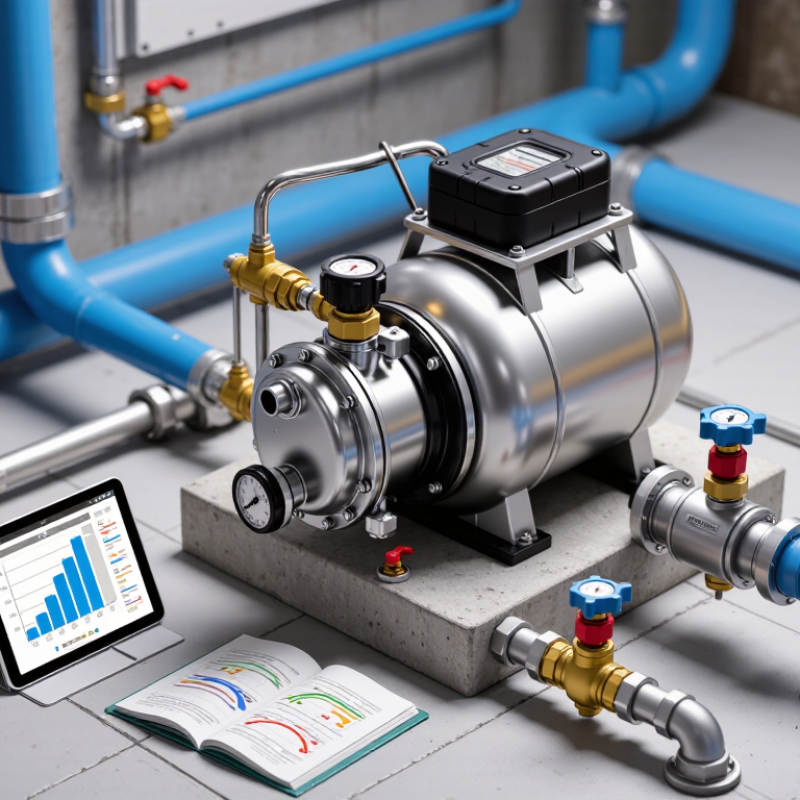
Choosing the right water service pump starts with measuring demand, not browsing pump catalogs.
Estimate peak flow by listing fixtures that may run together. A small house might need 10–15 gallons per minute, but actual use can vary. Check showers, irrigation zones, appliances, and storage tanks. Add realistic demand, not every outlet operating at once.
Static lift is the vertical distance from the water surface to the highest discharge point. Measure it in feet or meters. Then calculate total dynamic head, or TDH. TDH includes static lift, pipe friction, fitting losses, and the pressure needed at the outlet.
For example, a pump lifting water 40 feet may need another 15 feet for pipe resistance and 35 feet for useful pressure.
Its required TDH is about 90 feet.
Pipe size and condition matter. Old narrow pipes can quietly consume pressure. My first estimates were often too optimistic.
Tips:
Measure, do not guess. Use the longest pipe route. Record elbows, valves, filters, and elevation changes. Check the pump curve at your target flow and TDH, not at its maximum rating. Avoid choosing an oversized pump “for safety.” It may cycle frequently, waste energy, and stress the system. A simple pressure gauge and flow test can expose bad assumptions. Leave room for uncertainty, but question every number.
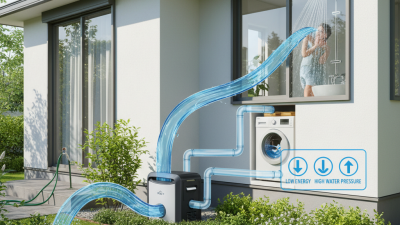
How to Choose the Right Water Service Pump?
Pressure and head describe the same pumping effort in different ways. One bar equals approximately 10.2 meters of water head. That means a pump producing 3 bar provides about 30.6 meters of water head, before system losses. The conversion is simple. Pump selection is not.
Start with the required flow rate and total head. Total head includes vertical lift, pipe friction, bends, filters, valves, and the pressure needed at the outlet. For example, lifting water 12 meters and maintaining 2 bar at a tap already requires about 32.4 meters of head. Add friction losses after that. A narrow pipe can quietly consume several meters of head. I have seen systems fail because installers counted elevation but ignored fittings.
Read the pump curve carefully. Its stated pressure may apply only at low flow, which can be misleading. Check the curve at your actual operating flow. Also confirm whether the pressure reading is gauge pressure, because atmospheric pressure affects interpretation. Water temperature and density cause smaller changes, but they still matter in precise applications. Do not select the pump at its maximum rating. Leave a practical margin, perhaps 10% to 20%, while avoiding excessive pressure. My early calculations were sometimes too optimistic. Rechecking pipe lengths and outlet requirements usually exposed the gap.
Translate Pressure to Head: 1 bar ≈ 10.2 m of Water
Water pressure and pump head are closely related. At standard conditions, 1 bar of pressure is approximately equal to 10.2 metres of water head. Use this relationship as a practical reference when comparing system pressure requirements with pump performance.
Choosing the right water service pump starts with its duty point: required flow, head, and operating speed. Do not select a pump from flow alone. A system moving 40 m³/h at 30 m head needs a different impeller and motor than one moving the same flow at 55 m head. Review pipe length, elevation, valves, filters, and pressure losses before choosing equipment.
Pump affinity laws help predict how speed changes affect performance. Flow follows Q ∝ N, so a 10% speed increase produces roughly 10% more flow. Head follows H ∝ N², raising available head by about 21%. Power follows P ∝ N³, increasing demand by nearly 33%.
That final relationship matters. A small speed adjustment can overload a motor, especially when water temperature, viscosity, or suction conditions differ from the design case. I have seen calculations look correct while a partially blocked strainer quietly changed the real duty point.
Tips: Mark the duty point on the pump curve. Check motor power at maximum expected speed. Confirm NPSH margin under the worst suction condition. Use measured pressure readings, not assumptions. Keep a small safety margin, but avoid excessive oversizing; oversized pumps often waste energy through throttled valves. Recheck the calculations after installation, because actual pipework rarely matches the drawing perfectly.
How to Choose the Right Water Service Pump?
Prevent cavitation by keeping NPSHA above NPSHR, as recommended by ANSI/HI guidance. NPSHA describes the suction conditions available at the pump. NPSHR describes the minimum required by the pump at a stated flow. The available value must exceed the required value with a practical margin. Check water temperature, elevation, tank pressure, suction pipe losses, fittings, and strainer condition. Warm water can reduce the margin quickly. Cavitation sounds like gravel inside the casing. It can also damage impellers, seals, and bearings.
Tips: Calculate NPSHA at the most demanding operating point, not only the normal one. Include startup, low tank levels, seasonal temperature changes, and possible flow increases. Confirm NPSHR data at the actual speed and capacity. Test suction pressure in the field when possible. A clean drawing is not proof of clean water flow. Small air leaks can distort the result. Keep suction piping short, flooded, and generously sized.
A suitable pump should meet duty flow and head without operating near the edge of its curve. Do not treat the published NPSHR as a universal safety limit. It comes from specific test conditions and may not reflect site behavior. In field reviews, a neat calculation can still be wrong when valves are partly closed or gauges are poorly positioned. I would rather question an optimistic margin than explain damaged equipment later. Recheck the calculation after every system change.
Use this operating-point screening table to compare available net positive suction head (NPSHA) with the pump's required net positive suction head (NPSHR). A suitable selection keeps NPSHA above NPSHR under the most demanding expected conditions and preserves practical margin against cavitation.
| Case | Suction Arrangement | Water Temperature (°C) |
Surface Pressure (kPa abs) |
Water Vapor Pressure (kPa abs) |
Liquid Density (kg/m³) |
Static Suction Head (m) |
Suction-Line Loss (m) |
NPSHA (m) |
NPSHR at Design Point (m) |
NPSH Margin (m) |
NPSHA / NPSHR | Screening Result |
|---|---|---|---|---|---|---|---|---|---|---|---|---|
| A | Open tank, flooded suction | 40 | 101.3 | 7.4 | 992 | +2.50 | 0.60 | 11.55 | 3.00 | 8.55 | 3.85 | Pass — strong reserve |
| B | Open tank, short flooded suction | 20 | 101.3 | 2.3 | 998 | +1.00 | 1.20 | 9.90 | 4.20 | 5.70 | 2.36 | Pass — adequate reserve |
| C | Open tank, suction lift | 20 | 101.3 | 2.3 | 998 | −3.50 | 0.80 | 5.80 | 4.50 | 1.30 | 1.29 | Pass — low reserve |
| D | Closed vessel, pressurized flooded suction | 60 | 180.0 | 19.9 | 983 | +0.50 | 1.00 | 16.10 | 5.00 | 11.10 | 3.22 | Pass — strong reserve |
| E | Open tank, hot-water flooded suction | 80 | 101.3 | 47.4 | 972 | +1.50 | 1.00 | 6.15 | 4.80 | 1.35 | 1.28 | Pass — low reserve |
Choosing a water service pump starts with the materials that touch drinking water. The casing, seals, coatings, and wetted fittings should comply with NSF/ANSI 61 requirements. This standard helps verify that materials will not introduce harmful contaminants into the water supply.
Look for documented certification, not just a printed claim. Ask for the current certificate, covered components, and testing scope. A certificate may cover one seal or fitting, not the entire pump. That detail is easy to miss. I have seen purchase decisions rely on a supplier’s brochure alone. That approach feels efficient, but it leaves important questions unanswered.
Efficiency rules also deserve careful checking. Requirements can vary by location, pump size, motor type, and installation purpose. Compare the pump’s rated flow and pressure with actual demand. An oversized unit may cycle frequently, waste electricity, and wear out faster. Review motor efficiency data and consider a variable-speed control when demand changes throughout the day. However, controls add complexity and require proper setup. A simple system can sometimes perform better when correctly sized.
Keep records of certificates, test reports, motor data, and installation settings. Confirm local approval requirements with the responsible water authority or a qualified engineer. Field conditions may differ from calculations, especially when pipe length, elevation, or seasonal demand changes. Measure performance after installation instead of trusting estimates alone. Small errors matter.
We are here to help you with all your queries and concerns, just write to us using the below form and we will get back to you as soon as we can.