China Top Water Pump Equipment Manufacturers?

China has become a major manufacturing base for water pump equipment, serving construction, agriculture, municipal water systems, mining, and industrial facilities. Its supplier landscape includes large state-linked groups, specialized factories, and export-focused manufacturers. However, “top” should not mean the biggest name alone.

A reliable comparison must examine pump efficiency, material quality, testing procedures, delivery records, and after-sales support. Look closely at stainless-steel grades, cast-iron thickness, seal design, motor protection, and actual operating curves. A pump may look impressive in a catalog yet perform poorly under changing pressure or dirty water conditions. Field experience matters.

Michael Michaud, former executive director of the Hydraulic Institute, has emphasized, “Energy efficiency is not just about the motor; it is about the entire pumping system.” This principle gives the comparison a practical direction. The strongest China-based manufacturers should demonstrate stable performance, clear documentation, traceable quality control, and responsive technical service. Certification helps, but it is not the whole story.

Small details reveal much.

This guide reviews leading Chinese water pump equipment manufacturers through an informed, realistic lens. It considers product range, engineering capability, export experience, customization, and long-term operating value. Some rankings may remain debatable. That is unavoidable. Buyer requirements differ between a compact booster set in Shanghai and a large dewatering system at a remote mine. Readers should verify specifications, factory audits, references, and local compliance before making a final decision.
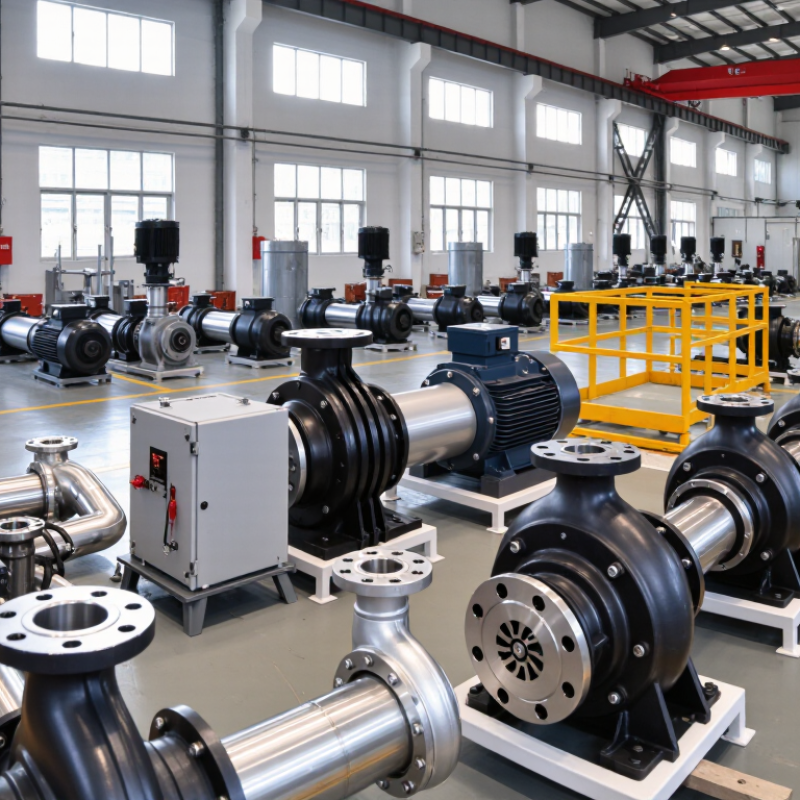
China Top Water Pump Equipment Manufacturers?

What Defines a Top Water Pump Equipment Manufacturer in China

A top water pump equipment manufacturer in China is defined by more than factory size or export volume. It begins with practical engineering experience. Teams should understand head, flow, temperature, fluid quality, and duty cycles before recommending a pump. On a production floor, this knowledge appears in details: balanced impellers, clean castings, accurate shaft machining, and seals selected for actual operating conditions. Good manufacturers discuss failure risks openly. They do not promise that one model fits every site.

Reliable production requires repeatable controls. Incoming metal should be checked, dimensions should be recorded, and motors should be tested under load. Each pump needs traceable inspection data, not only a polished brochure. Performance testing should compare flow, pressure, power use, vibration, and noise with declared curves. Small deviations matter. A two-millimeter mismatch can create installation trouble months later. Documentation, spare-part continuity, and responsive technical support also reveal whether a supplier remains dependable after delivery.

Professional manufacturers invest in design improvement, technician training, and field feedback. They may offer drawings, material options, installation guidance, and maintenance schedules suited to each application. Independent audits and recognized management systems can strengthen trust, but certificates cannot replace real testing. This is where judgment remains important. No factory gets every decision right, and some specifications are revised after site experience. A trustworthy supplier admits uncertainty, explains limitations, and corrects defects quickly. That attitude often matters more than a low initial quotation.
What Defines a Top Water Pump Equipment Manufacturer in China?

This evaluation framework uses a 100-point benchmark to show the factors commonly considered in industrial and municipal pump procurement. Technical performance, quality compliance, energy efficiency, customization capability, delivery reliability, and lifecycle service are emphasized. Relevant reference areas include ISO 9906 pump testing and China’s GB 18613 motor-efficiency requirements.

Major Types of Water Pump Equipment Made in China

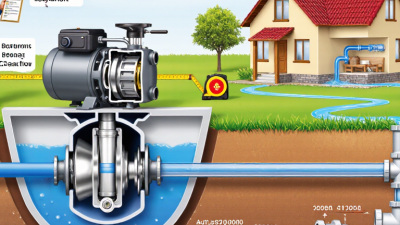
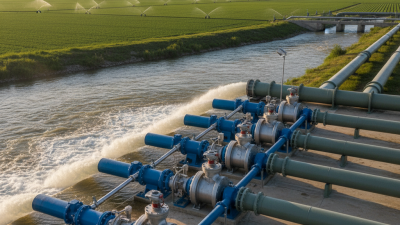
China’s water-pump equipment sector covers irrigation, municipal supply, construction, mining, and industrial processing.

Major types include centrifugal, multistage, submersible, axial-flow, mixed-flow, diaphragm, gear, and screw pumps.

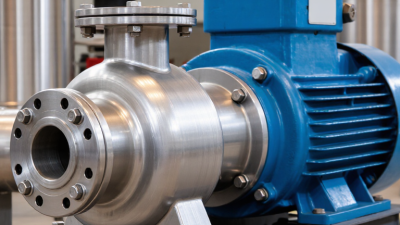
Centrifugal pumps suit clean-water transfer and general circulation. Multistage models create higher pressure for tall buildings and boiler systems.

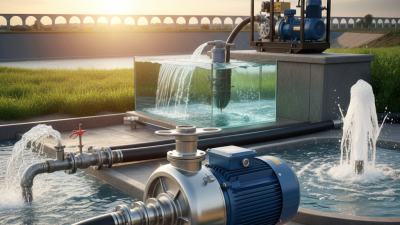
Submersible pumps work inside wells, drainage pits, and sewage chambers. Axial-flow and mixed-flow units move large water volumes at relatively low head.

Diaphragm and screw pumps handle thicker fluids, while dosing pumps deliver chemicals at controlled rates.

The UN World Water Development Report 2024 states that agriculture accounts for about 70% of global freshwater withdrawals. That figure explains China’s continuing demand for irrigation pumps, drainage systems, and solar-powered pumping equipment.

Energy performance deserves close attention.

The International Energy Agency estimates water-related activities consume about 4% of global electricity. Variable-speed drives, correct impeller sizing, and efficient motors can reduce waste during changing demand.

China’s Water Resources Bulletin 2023 reported national water use of roughly 688 billion cubic metres, showing the scale of pumping infrastructure required.

However, catalog flow rates can mislead. Real installations face clogged screens, worn seals, voltage changes, and poorly matched pipe diameters.

I would inspect efficiency curves, materials, test records, and after-sales support before comparing prices. A cheaper pump may consume more power every hour.

Field measurements still matter.

Leading Chinese Manufacturers by Product and Application

China’s water-pump manufacturing strength is best understood by product and application. Centrifugal pumps serve municipal water networks, cooling loops, and general industrial transfer. Axial-flow and mixed-flow pumps suit flood control and large irrigation channels. Submersible pumps handle drainage, sewage lifting, and construction sites where installation space is limited. Positive-displacement models provide stable flow for dosing, filtration, and high-viscosity liquids.

Application changes the buying decision. Agriculture remains critical because it accounts for about 70% of global freshwater withdrawals, according to FAO AQUASTAT. Irrigation buyers often value high flow, simple maintenance, and efficient motor matching. Municipal projects require corrosion control, low noise, remote monitoring, and documented performance testing. Industrial users need material compatibility and dependable operation under heat, solids, or chemical exposure. The IEA reports that motor-driven systems consume roughly 53% of global electricity, making variable-speed control more than a technical luxury.

Experienced purchasers should compare hydraulic curves, efficiency at actual duty points, seal design, spare-parts availability, and testing records. ISO 9906 testing can improve confidence, while IEC motor efficiency classes support clearer energy comparisons. A lower purchase price may hide higher electricity costs. That mistake is common. Chinese suppliers also differ in casting quality, automation, export documentation, and after-sales response. A careful evaluation should include site data, not only catalogue ratings, because a pump selected from ideal conditions may perform poorly in muddy water, fluctuating voltage, or oversized pipelines.

China Top Water Pump Equipment Manufacturers? - Leading Chinese Manufacturers by Product and Application

Product Category Typical Application Typical Flow Range Typical Head Range Common Materials Common Motor or Drive Configuration Relevant Technical References
End-Suction Centrifugal Pumps Building services, municipal water supply, irrigation, general industrial circulation 5–2,000 m³/h 10–160 m Cast iron, ductile iron, stainless steel, bronze Electric motor, direct-coupled or base-mounted ISO 2858; ISO 9906; IEC 60034
Multistage Centrifugal Pumps Boiler feed, high-rise water supply, reverse-osmosis pretreatment, process water boosting 1–500 m³/h 50–1,000 m Cast iron, stainless steel, duplex stainless steel Horizontal or vertical construction; fixed-speed or variable-frequency drive ISO 9906; IEC 60034; applicable pressure-vessel and piping requirements
Submersible Sewage Pumps Municipal wastewater, drainage stations, construction dewatering, industrial effluent 5–3,000 m³/h 5–100 m Cast iron, stainless steel, hardened alloy components Submersible dry or water-filled motor; cutter or vortex impeller options ISO 9906; IEC 60034; local wastewater and electrical safety requirements
Axial-Flow and Mixed-Flow Pumps Flood control, drainage, irrigation, water-transfer and circulation systems 500–50,000 m³/h 2–35 m Cast iron, stainless steel, bronze, coated carbon steel Vertical shaft, submersible motor, or diesel-engine drive ISO 9906; hydraulic performance and structural design specifications
Self-Priming Pumps Portable drainage, construction sites, agricultural irrigation, wastewater transfer 10–1,000 m³/h 5–80 m Cast iron, aluminum, stainless steel, elastomer-lined components Electric motor, gasoline engine, diesel engine, or trailer-mounted package ISO 9906; applicable engine, electrical, and environmental regulations
Chemical Process Pumps Chemical processing, plating, mining, pharmaceutical production, acid and alkali transfer 0.5–1,000 m³/h 10–150 m PP, PVDF, PTFE-lined steel, 316 stainless steel, duplex stainless steel Magnetic-drive, mechanical-seal, or canned-motor configurations ISO 2858; ISO 5199; material compatibility and process-safety requirements
Fire-Fighting Pump Sets Commercial buildings, warehouses, factories, infrastructure and fire-protection systems 10–1,000 m³/h 30–250 m Cast iron, ductile iron, carbon steel, stainless steel Electric motor and diesel-engine duty/standby sets with jockey pump NFPA 20; EN 12845; local fire-protection codes and certification rules
Solar-Powered Water Pumps Rural drinking water, livestock supply, irrigation and off-grid water transfer 0.2–200 m³/h 10–300 m Stainless steel, engineering plastics, cast iron Brushless DC or AC motor with solar controller and optional battery storage IEC 60034; IEC 61215 and IEC 61730 for photovoltaic modules; ISO 9906

Note: Capacity and head figures are representative ranges commonly available in the Chinese pump-equipment market. Actual performance depends on impeller diameter, motor rating, fluid properties, installation conditions, and the selected duty point.

How to Evaluate China’s Water Pump Equipment Suppliers

Evaluating China’s water pump equipment suppliers requires more than comparing online prices. I start with the pump’s duty point: flow, head, fluid temperature, and operating hours. A reliable supplier should provide a clear performance curve, material list, efficiency data, and motor details. Ask whether these figures come from internal testing or independent verification. Small gaps here can create large energy costs later.

A factory visit can reveal practical evidence. Check machining areas, assembly benches, pressure-test stations, and finished-pump storage. Ask to see recent test records, calibration dates, and procedures for handling failed units. Inspect casting surfaces, shaft seals, couplings, cable glands, and packaging. I also request a sample or pilot order before approving larger quantities. It exposes communication problems early. References from similar industrial users are valuable, but verify them directly rather than trusting a prepared list.

Supplier assessment should also cover documentation and support. Confirm applicable safety and electrical requirements for the destination market. Review warranty terms, spare-parts availability, response times, and installation guidance in writing. A capable engineer should explain cavitation risk, pump selection limits, and maintenance intervals without hiding behind vague claims. No audit catches everything. I have seen polished workshops with inconsistent records, so repeated checks matter. A low quote may look attractive, yet weak testing or unclear tolerances can make the final cost much higher.

Quality Standards, Certifications, and After-Sales Service

Choosing China’s top water pump equipment manufacturers requires more than comparing prices. Quality begins with documented production controls, material traceability, and repeatable testing. Ask whether each pump receives a factory pressure test, vibration check, and performance verification. Request the actual test report, not only a sales promise.

Certifications should match the product and destination market. ISO 9001 can show a controlled quality system, but it does not prove every pump performs well. CE marking may apply to relevant European requirements, while other markets may require separate electrical or safety approvals. Check the certificate scope, issue date, and manufacturer details carefully. Ask for performance curves at your operating point, such as 80 cubic meters per hour at 45 meters head. Small mismatches can cause overheating, noise, or disappointing efficiency.

After-sales support often reveals the supplier’s real reliability. A capable manufacturer should provide installation manuals, wiring diagrams, spare-parts lists, and clear warranty terms. Confirm response times for technical questions and the availability of seals, bearings, and control components. Remote video support can help during commissioning, but it cannot replace trained field service. Ask for references from similar installations. Some suppliers answer quickly before payment, then become slow later. That risk deserves honest discussion. Keep written records of agreed testing, delivery scope, and service responsibilities.

Our dedicated sales and support staff are here to help you identify the ideal pump solution for your needs.

Contact Us