Top Water Service Pump Types for Global Buyers

Choosing a water service pump is not just a matter of matching a catalog flow rate. Buyers must consider the water source, required pressure, operating hours, fluid quality, and available power. A municipal booster station has different demands from a deep well or a building’s pressure system. Small details matter: pipe length, suction lift, and daily demand can change the best choice.

The need is substantial. WHO and UNICEF reported that 2.2 billion people lacked safely managed drinking water in 2022, in their 2023 Joint Monitoring Programme update. UNESCO’s United Nations World Water Development Report 2024 states that agriculture accounts for about 70% of global freshwater withdrawals. That figure describes water use, not pump sales, but it highlights how varied pumping needs can be. Fit comes first.

This guide compares common water service pump types, including centrifugal, submersible, vertical multistage, and positive-displacement models. It considers where each design works well, what limits performance, and which operating conditions deserve a closer look. A pump’s rated capacity alone cannot guarantee reliable service. Buyers should also review efficiency, materials, maintenance access, and the manufacturer’s published performance curve. Local power conditions and installation practices matter, too. A catalog rating is not the whole story. Real systems can behave differently. That deserves honest attention.
Top Water Service Pump Types for Global Buyers

Understanding Water Service Pumps and Their Main Functions

Water service pumps move water where gravity alone cannot provide enough flow or pressure. In a home, one may draw water from a storage tank and send it to taps. In a larger building, pumps can maintain pressure across upper floors. That is the basic job. The details matter.

Centrifugal pumps are common for steady water transfer and pressure boosting. They use a rotating impeller to move water through the system. Submersible pumps sit underwater, often in wells or drainage pits, and push water upward. Positive-displacement pumps move a measured volume with each cycle, making them useful where flow needs close control. No pump suits every installation. Pipe length, elevation, demand, and water quality all affect performance.

Buyers should compare required flow rate and total head, not just motor power. A pressure gauge near the outlet can reveal whether a system is meeting its target. Check the pump’s materials, seal design, and ability to handle expected temperatures or particles. Installation details count, too: a poorly sized inlet pipe can cause noisy operation and reduce flow. A tidy specification sheet can still hide a mismatch. Real demand often changes through the day, so operating conditions deserve a closer look.
Classifying Pumps by Operating Principle and Design

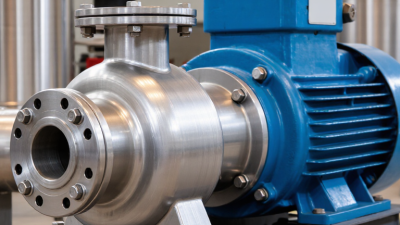
Water-service pumps are easier to compare when buyers separate operating principle from physical design. These labels answer different questions: how water moves, and how the equipment is built or installed. A centrifugal pump uses a rotating impeller to add velocity, then converts much of that motion into pressure. It suits steady-flow duties, such as circulating water through a building or filling a storage tank. Flow can fall as discharge pressure rises. That detail matters. Positive-displacement pumps trap a volume of water and push it onward with each cycle. They can suit controlled delivery or higher-pressure tasks, but pulsation and maintenance needs deserve attention. Not every system benefits.

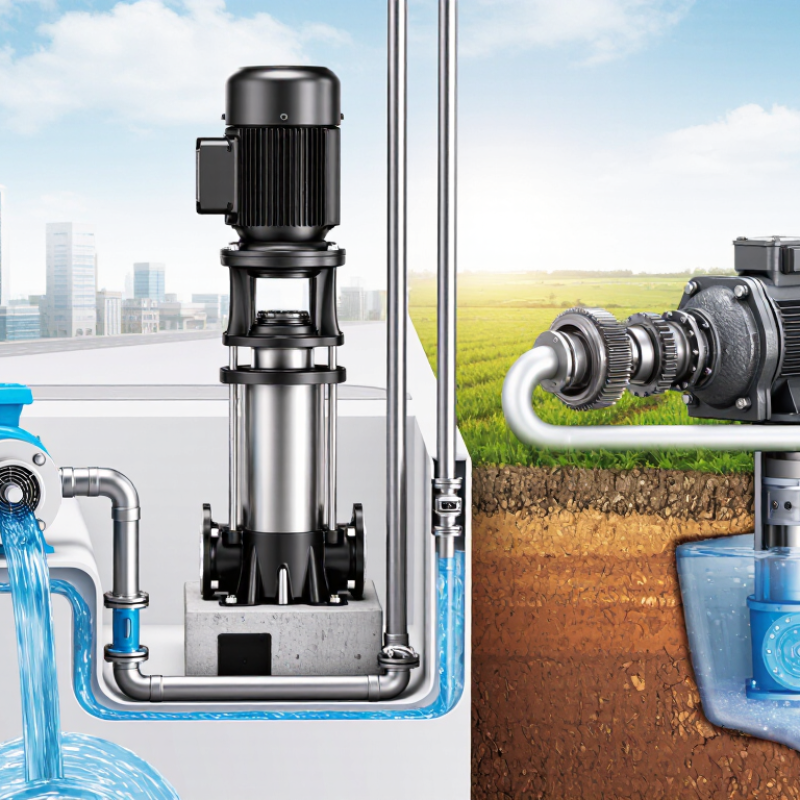
Design categories describe the pump’s arrangement. Submersible units place the motor and pump below water, useful in wells or sumps with limited surface space. Vertical turbine pumps lift water from deep sources through staged impellers and a long shaft. End-suction centrifugal models keep key components accessible for inspection, though they need room around the casing. Some designs share the same operating principle, so the names are not interchangeable. Buyers should compare required flow, total head, water temperature, solids, and installation space. A tidy classification chart can still mislead: real duty conditions are often less tidy than the specification sheet suggests. Check the pump curve against expected operation, not just the largest flow figure.

Top Water Service Pump Types for Global Buyers — Classifying Pumps by Operating Principle and Design
Pump Type Operating Principle and Design Typical Water-Service Applications Key Advantages Selection Considerations
End-Suction Centrifugal A rotating impeller adds velocity to the water, and the casing converts much of that velocity into pressure. The suction nozzle is generally axial, with discharge directed radially. Building services, irrigation, water transfer, and general-purpose supply. Simple, widely used design; available in a broad range of capacities and materials; generally straightforward to install and maintain. Check the duty point against the pump curve, suction conditions, available NPSH, and the required seal and material specifications.
Horizontal Split-Case Centrifugal A centrifugal pump with a casing that separates horizontally. Many designs use a double-suction impeller to draw water from both sides. Municipal water supply, large buildings, cooling-water circuits, and fire-water systems where permitted by local codes. Designed for substantial flow; the split casing can provide access to internal components without disconnecting major pipework. Allow for floor space, alignment, foundation, and lifting access. Confirm operating range, suction conditions, and applicable system requirements.
Vertical Turbine A vertical shaft drives one or more centrifugal bowl stages positioned below the water level. The drive may be above the pump or use a submersible motor. Deep wells, reservoirs, wet wells, and other installations where the water source is below the pump discharge point. Can lift water from deep sources; bowl stages can be selected to meet the required head and flow. Specify well or wet-well dimensions, water-level range, suspended solids, shaft or motor arrangement, and installation clearances.
Multistage Centrifugal Several impellers and diffusers are arranged in series. Each stage adds head, while the flow passes through the stages in sequence. Pressure boosting, water treatment, reverse-osmosis feed, boiler feed, and other services requiring higher pressure. Produces higher head than a comparable single-stage design and is available in horizontal or vertical configurations. Match the pump to the required flow and total dynamic head. Check water quality, temperature, pressure limits, and seal compatibility.
Submersible Centrifugal The pump and motor operate below the liquid surface in a sealed assembly. Common water-service designs use centrifugal impellers. Drainage, sewage and wastewater handling, wells, sumps, and flooded installations, depending on the pump design. Does not require a conventional suction lift or a separate dry pump room; useful where the liquid source is below ground level. Choose a design suited to the liquid and solids content. Check submergence, motor cooling, cable length, discharge connection, and access for removal.
Axial-Flow or Mixed-Flow Axial-flow pumps move water mainly parallel to the shaft. Mixed-flow designs combine axial and radial flow to provide an intermediate flow and head profile. Flood control, drainage, irrigation, and large-volume water transfer at relatively low or moderate head. Suitable for high flow rates; the flow direction and impeller design can fit large-scale transfer duties. Confirm the required flow and head, installation arrangement, submergence, and operating range. These pumps may be sensitive to operation far from their design point.
Reciprocating Positive-Displacement A piston or diaphragm moves back and forth within a chamber. Inlet and discharge check valves control the transfer of a defined volume per cycle. Water dosing, metering, sampling, and specialized duties requiring controlled low flow or higher pressure. Can provide controlled flow over a range of discharge pressures; useful where precise dosing is required. Flow is pulsating unless dampened. Provide suitable overpressure protection, check materials and valve compatibility, and follow the pump’s operating limits.

Buyer checklist: Compare the required flow rate and total dynamic head with the pump curve; verify liquid temperature, water quality, materials, seal type, motor supply, efficiency, applicable standards, and service access. Final selection should be based on the complete system conditions.

Comparing Common Water Service Pump Types

Comparing Common Water Service Pump Types

Centrifugal pumps suit steady, high-volume water transfer in treatment plants and building services. Their rotating impeller creates flow, but performance can fall when the pump operates far from its best-efficiency point. The U.S. Department of Energy’s Improving Pumping System Performance sourcebook reports that pumping systems use nearly 20% of global electricity demand. That figure covers many sectors, not water service alone, yet it makes efficiency a practical selection criterion. Check the duty curve, expected flow, and pressure—not just the motor rating.

Submersible pumps work underwater, making them useful for wells, drainage sumps, and wastewater lifting. They avoid long suction lines, though access for inspection can be awkward.

Positive-displacement pumps, including diaphragm and rotary types, deliver controlled flow against changing pressure. They can handle dosing or viscous fluids, but may need pressure-relief protection.

Small details matter. A gritty well, a narrow pipe, or frequent starts can change the best choice. The DOE sourcebook also notes potential energy savings of 20–50% through pumping-system improvements; actual results depend on the installation, controls, and operating pattern. A pump selected from a catalog alone may look right, then disappoint in the field.

Matching Pump Types to Water Supply Applications

Pump selection begins with the duty, not the product label: required flow, total head, water quality, and operating hours. UNESCO’s 2023 World Water Development Report estimates agriculture accounts for 72% of global freshwater withdrawals. Industry takes 15%, and domestic use 13%. These global shares are useful context, not local design targets. An end-suction centrifugal pump often suits clean-water transfer between tanks. Submersible pumps fit deep boreholes where surface space is limited. For sustained, higher-volume irrigation, vertical turbine or split-case pumps may be appropriate, depending on source levels and suction conditions.

Building services often need booster pumps to maintain pressure across changing demand. For accurate chemical dosing or low-flow transfer, a positive-displacement pump can offer better control than a standard centrifugal unit. Match the pump curve to the system curve, and check whether the motor can handle expected operating conditions. Do not size from pipe diameter alone. That shortcut fails. A tidy spreadsheet can still miss seasonal drawdown, grit, or a sharp morning demand peak. I have seen estimated duty points shift once actual well levels were measured. Field data is not always convenient, but it can prevent a costly mismatch.

Evaluating Performance and Selection Factors for Global Buyers

Water service pump selection starts with the job, not the pump label. Centrifugal pumps suit steady, relatively clean water flows, while submersible models can handle drainage where equipment must sit below the waterline. Multistage designs can provide higher pressure for tall buildings or long pipe runs. Positive-displacement pumps may fit low-flow duties that need consistent delivery.

Numbers matter. Check required flow and total head together; a pump that meets one but not the other may run inefficiently. Not just horsepower.

Compare performance curves at the expected operating point, rather than relying on maximum flow figures. Also check water temperature, suspended solids, suction conditions, and daily duty hours. A small site with frequent starts may need different controls from a continuous-use facility.

Power supply, frequency, connection size, installation space, and local service access can narrow the options across markets. Ask for documented test data and clarify how performance changes with wear.

It is easy to overvalue efficiency figures and underestimate maintenance access; a cramped installation can make routine seal or bearing work costly. Leave a sensible operating margin, but avoid oversizing, which can increase energy use and wear.

Our dedicated sales and support staff are here to help you identify the ideal pump solution for your needs.

Contact Us