China Top 10 Pumps to Pump Water for Buyers?
Choosing a pump to pump water in China involves more than comparing prices or reading a product label. Buyers need to match the pump to the water source, required flow, delivery height, pipe length, and operating schedule. A unit lifting water from a shallow tank faces different demands from one serving a deep well or a long irrigation line. Small details matter. A narrow pipe can increase resistance, while a fluctuating water level may affect performance.
Pump engineer Igor J. Karassik’s Pump Handbook is a respected technical reference. The following is a paraphrase of its central selection principle, not a verbatim quotation: “Choose the pump for the system’s duty, not for its nameplate alone.” That distinction helps buyers assess China’s pump market more carefully. A useful comparison should examine pump type, materials, motor efficiency, rated flow and head, maintenance access, and the supplier’s ability to provide clear specifications. A low purchase price may not mean low operating cost. Check the stated duty point.
This guide introduces ten pump options for buyers seeking to pump water, while treating “top” as a practical comparison rather than a universal ranking. Applications differ. A farm, building, workshop, and household may each need a different design. Product claims also deserve scrutiny: confirm performance data, warranty terms, spare-parts availability, and documentation directly with the manufacturer. One caution remains. Published specifications do not replace a system assessment. Matching the pump to real site conditions is what makes a shortlist useful.
Water-Pump Basics: Match Flow Rate, Total Head, and NPSH to the Duty
Pump selection starts with the duty, not the largest number on a product sheet. Record the required flow rate, such as liters per minute, and when that flow is needed. Total head includes vertical lift, pressure demands, and losses through pipes, elbows, valves, and filters. A narrow, long pipe can add meaningful resistance. Small details matter.
Check the operating point against the pump curve: the chosen pump should deliver the target flow at the calculated total head. Then check NPSH. Available NPSH depends on the water level, suction-pipe losses, temperature, and site elevation; it must exceed the pump’s required NPSH by a suitable margin. Otherwise, vapor bubbles may form and damage performance. Noisy operation can be a warning. A tidy calculation can still miss a partly closed valve or a lower-than-expected tank level, so verify assumptions on site. Record actual flow and pressure after installation, and revisit the selection if the readings differ from the duty.
China Water-Pump Selection: Match Flow, Total Head & NPSH
An illustrative pump-selection chart for comparing a pump curve with a system curve and checking NPSH at the duty point.
The example duty point is approximately 81.6 m³/h at 36.7 m total head, where the pump curve meets the system curve. At that flow, illustrative NPSH available is 5.0 m and NPSH required is about 3.2 m. These modeled values are for explanation only, not manufacturer performance data; confirm actual pump curves, system losses, and the required NPSH margin for the installation.
China’s Top 10 Water-Pump Suppliers: Compare Product Types and Applications
China’s Top 10 Water-Pump Suppliers: Compare Product Types and Applications
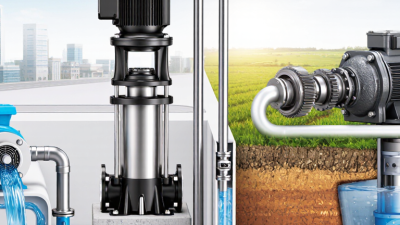
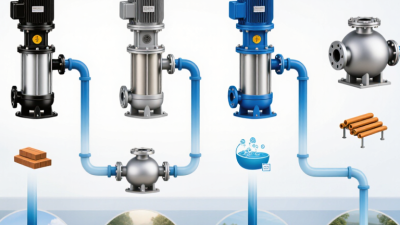
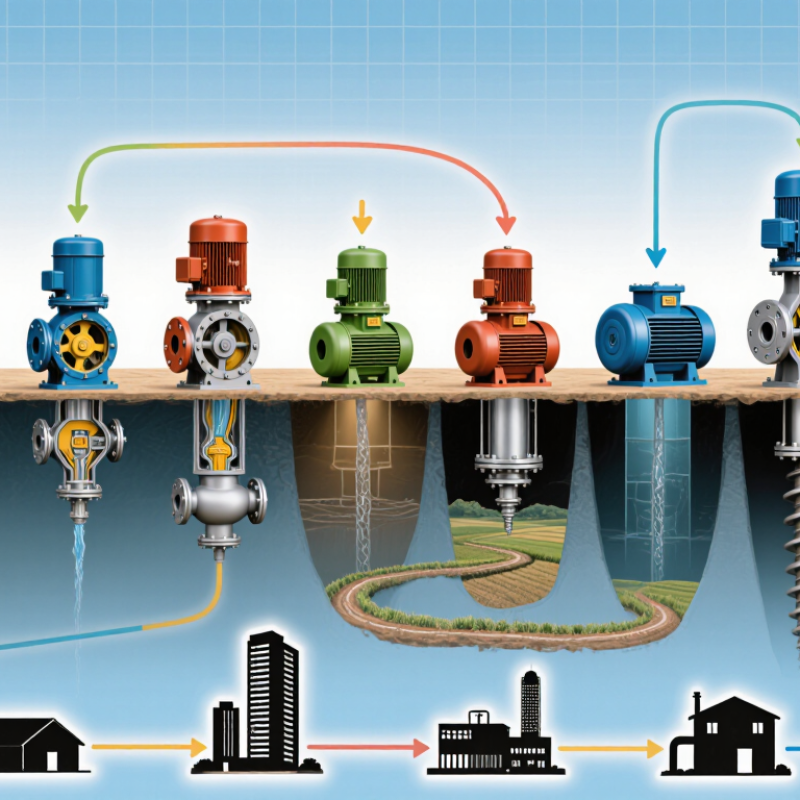
Choosing among China’s leading water-pump suppliers starts with the job, not the catalogue. Centrifugal pumps suit steady transfer in farms and water systems. Submersible models work in wells, sumps, and drainage pits. Multistage pumps provide higher pressure for buildings and long pipe runs. Self-priming designs can help where suction lines are difficult to keep filled. A “top ten” list can change with production capacity, testing resources, and export experience, so treat rankings as a starting point.
Compare each model’s flow rate and total head against your actual site conditions. A pump rated for high flow may disappoint when long pipes or elevation increase resistance. Check the liquid temperature, expected solids, wetted materials, motor rating, and duty cycle. Ask for a performance curve and test records for the proposed model. These details help buyers compare suppliers on evidence rather than polished product photos. I would still verify key figures independently; paperwork alone is not proof.
Tips: Share pipe length, lift height, liquid type, and daily operating hours before requesting a quotation. Confirm spare-part availability and service response time. Keep one point in mind: the cheapest pump may cost more if it is poorly matched.
Assess Hydraulic Performance Using ISO 9906:2012 Acceptance Grades
When comparing China’s top ten water pumps, start with the duty point, not a headline efficiency figure. ISO 9906:2012 provides a framework for checking whether measured flow, head, and power match agreed guarantees. Specify the acceptance grade before testing; tighter grades generally allow smaller deviations.
Details matter. A pump rated for 50 cubic metres per hour at 32 metres of head should be tested at that condition, with speed and impeller diameter recorded. This avoids comparing unlike curves.
Ask for the test report, instrument calibration status, water temperature, and measurement uncertainty—not just a pass label. Confirm whether the selected grade applies to the guaranteed point or the full curve. The contract should state this clearly.
ISO acceptance testing does not replace checks for materials, sealing, corrosion resistance, or installation conditions. Those affect service life. A tidy curve can still hide differences in test setup, so buyers should review the underlying measurements and question unclear deviations before selecting a pump.
Compare Water-Pump Efficiency with the EU MEI Benchmark of 0.40
MEI 0.40 is a useful screening point when comparing water pumps, but it does not mean 40% hydraulic efficiency.
Under EU Regulation (EU) No 547/2012, covered clean-water pump types must meet an MEI of at least 0.40. The index compares efficiency against a reference curve at the best-efficiency point and nearby operating conditions. Check that the pump type and test basis match before comparing supplier figures.
The U.S. Department of Energy’s Improving Pumping System Performance sourcebook reports that pumping systems use nearly 20% of global electricity demand. Small efficiency gaps matter over long operating hours. Still, a high MEI alone cannot predict a site’s energy bill. A pump running far from its best-efficiency point may waste energy, even when its published index looks strong.
Ask for the test report, pump curve, and input power at your actual flow and head. For example, compare candidates at the same duty point, not just their maximum flow rates. A tidy score can still mislead. Pipe losses, valve throttling, and changing water demand affect real performance. The EU benchmark is a useful filter, not a complete buying decision.
Check Materials, Motor Protection, Certifications, and After-Sales Support
When comparing water pumps from Chinese suppliers, begin with wetted materials, not the product photo. Cast iron suits many general duties, while stainless steel may better resist corrosion in cleaner or mildly aggressive water. For sandy wells or chemically treated water, request the exact material grade and wear-part details; “stainless” alone is vague. Check seals, impellers, and casing together, since one weak component can limit service life. A clean brochure can still leave questions.
Review motor protection against the actual installation. Ask whether the motor has thermal overload protection, and confirm the enclosure rating suits the site’s exposure to dust or splashing. Dry-running protection may be important for wells or tanks with changing water levels. Do not assume every model includes it. Certifications should match the destination market, exact model, and electrical configuration; verify their scope with the issuing body. Before ordering, clarify warranty exclusions, spare-part lead times, and who handles technical questions after delivery. A written response-time commitment is more useful than a general promise of support. Installation conditions can still differ from the specification sheet, so keep that limitation in mind.